
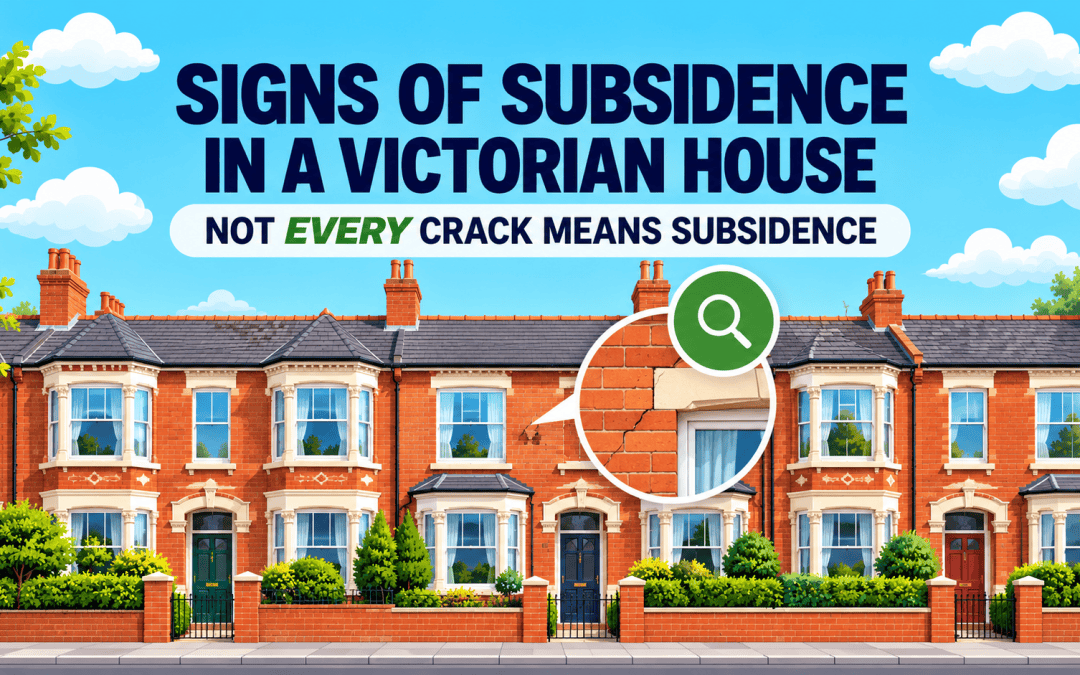
Subsidence or ordinary movement?
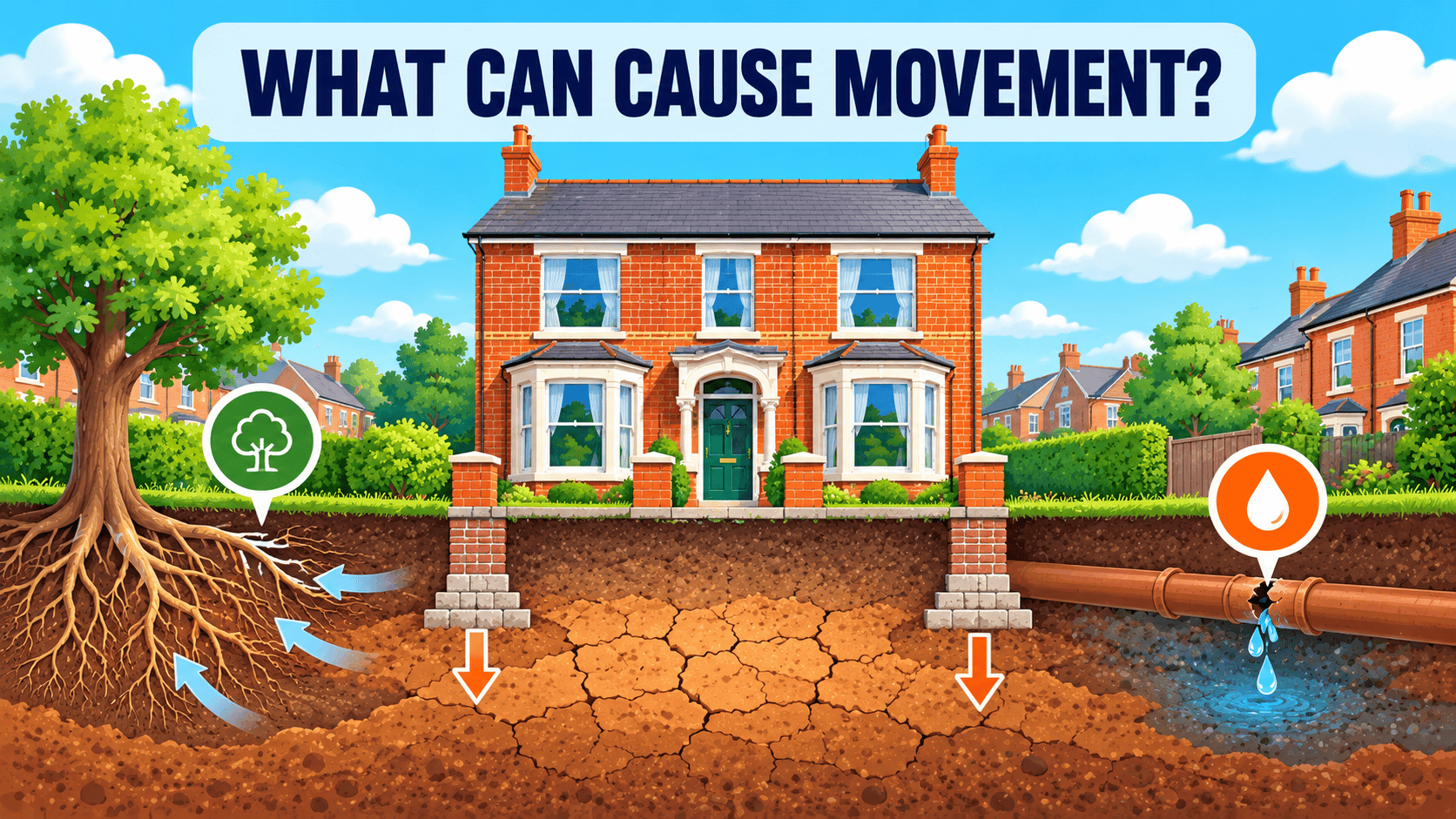
Subsidence occurs when the ground beneath part of a building moves downwards, reducing the support to its foundations. Settlement is different: it usually describes the adjustment that takes place after a building is constructed or altered.
Victorian houses have stood for well over a century, so a crack should be considered in the context of the whole property. Movement may be historic and stable, or it may be recent and require investigation.
A surveyor will look at the position, direction and extent of the cracking rather than relying on width alone. They will also consider alterations, previous repairs and whether the same movement can be seen elsewhere in the building.
What are the warning signs?

One isolated hairline crack is rarely enough to explain what is happening. A combination of connected changes is more informative.
- Cracks visible in corresponding positions inside and outside
- Diagonal cracks around doors and windows
- Floors that slope or appear to have changed level
- An extension, bay window or chimney pulling away from the main building
These signs do not prove that a property has subsidence. Sticking doors have other causes, floors in old houses are not always level and materials naturally move. What matters is how the signs relate to one another and whether they are changing.
Why can Victorian houses be affected?
Victorian houses were built using the materials and construction methods of their time. Their foundations may be shallower than those of modern homes, and many properties have since been extended, altered or repaired in different ways.
Ground conditions can also play a part. Clay soil changes volume as its moisture content rises and falls. Trees can draw moisture from the ground, while damaged drains may soften or wash away supporting material. In some parts of Yorkshire, historic mining or other former land use may also be relevant. In Hull clay can be a particular problem on Victorian Homes.
None of these factors confirms a problem on its own. Removing a tree without suitable advice may create further difficulties, so the building, its surroundings and its history should be considered together.
What should I do if I notice a crack?
Call a building surveyor. If the cracking is new, worsening or accompanied by other signs of movement, seek professional advice. Your buildings insurer may also need to be contacted where subsidence is suspected.
Which survey may be suitable?
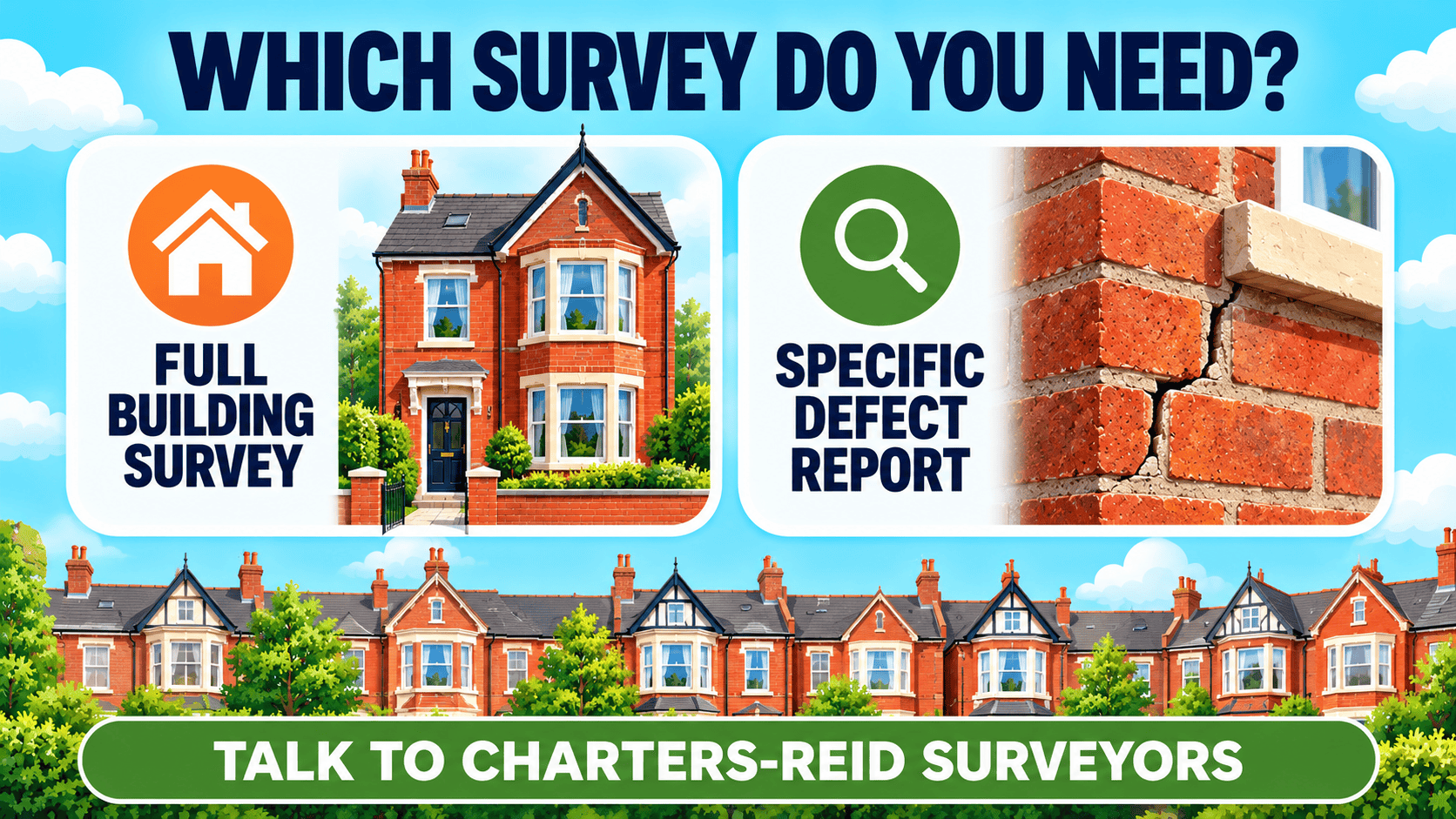
For an older, altered or visibly defective home, a RICS Home Survey Level 3 is often the most suitable starting point. It provides a detailed assessment of the accessible parts of the building and puts visible defects into the context of its age and construction.
If your concern relates to a particular crack or area of movement, a Specific Defect Report may be more appropriate. This allows the inspection and report to focus on the issue that is worrying you.
A building surveyor can identify signs consistent with movement and recommend sensible next steps. These might include monitoring, a drainage investigation or advice from a structural engineer. Underpinning is not an automatic conclusion.
Clear advice from Charters-Reid Surveyors ltd
Charters-Reid Surveyors ltd has provided professional surveying services across Yorkshire for more than 20 years, with over 200 years of combined experience across the practice.
Our surveyors understand traditional buildings and how older materials behave. We inspect carefully, explain our findings clearly and avoid making a property sound alarming simply because it is old.
If something is unclear, you can discuss the findings with a surveyor and ask focused questions about what was observed and what may need to happen next.
Arrange a survey for a Victorian house
If you are buying or already own a Victorian property and are concerned about cracking or movement, contact Charters-Reid Surveyors ltd. Tell us about the property, what you have noticed and whether the signs appear to be changing.
We can help you decide whether a Full Building Survey or Specific Defect Report is appropriate and provide a tailored quotation.
Visit surveys4you.co.uk or contact your local Charters-Reid Surveyors ltd office to discuss your property.
Frequently Asked Questions
Does every crack in a Victorian house mean subsidence?
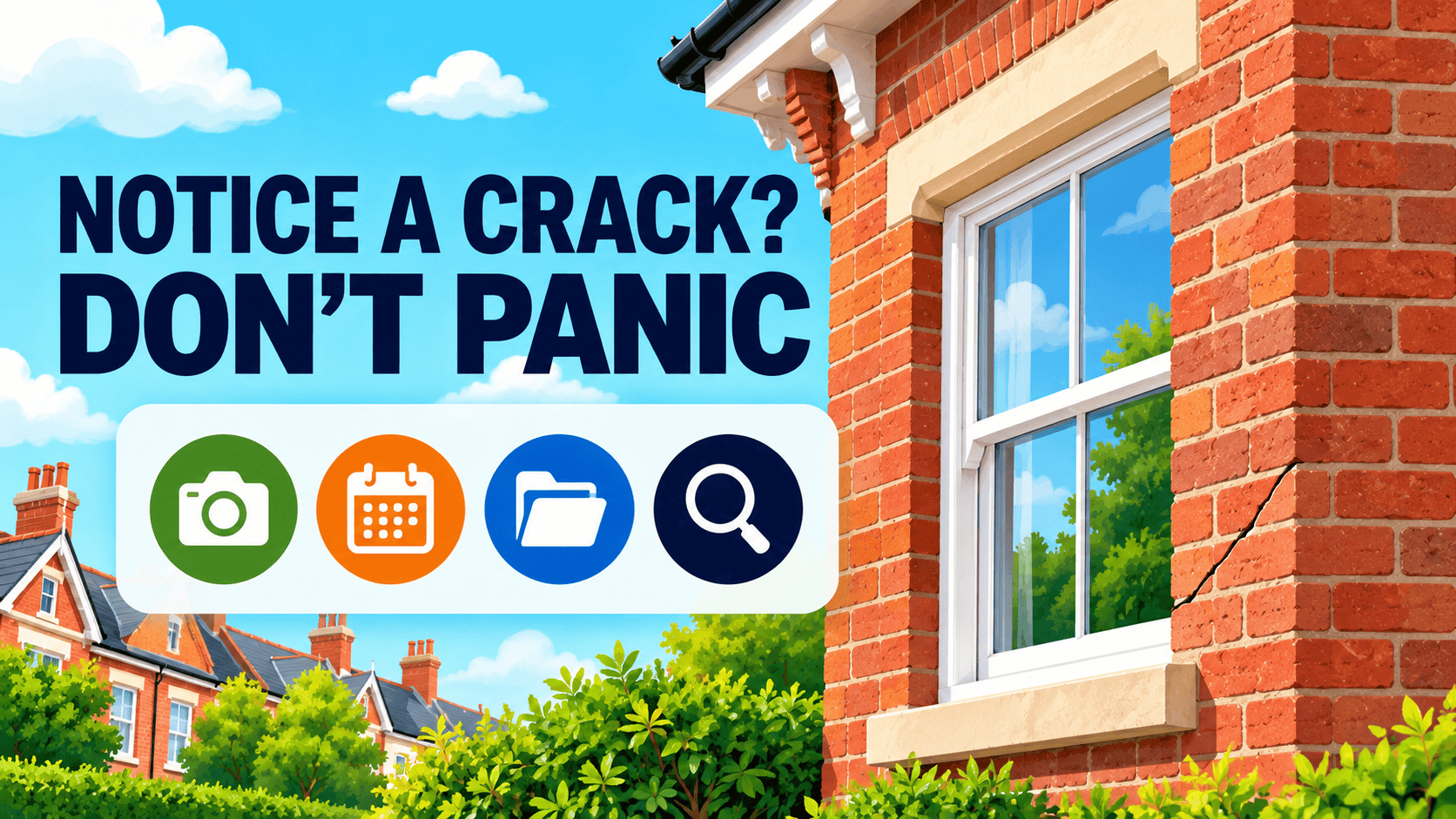
No. Cracks can result from ordinary movement, changes in temperature or moisture, ageing plaster, alterations and previous repairs. Their pattern, position and development are more useful than the presence of a crack alone.
Can a surveyor confirm the cause of movement?
A surveyor can assess visible evidence and explain what may be causing concern. Some cases require monitoring or further investigation by a drainage specialist or structural engineer before the cause can be established.
Should I walk away from a Victorian house with cracking?
Not necessarily. First understand whether the movement is historic or ongoing, what caused it and what work has been completed. A survey and the property’s records can help you consider the issue in context before making your decision.
Is a Level 3 survey suitable for a Victorian house?
A Level 3 survey is commonly suited to older, altered, unusual or visibly defective properties. The right service depends on the individual building and the concerns you need the surveyor to address.